$6.3 Billion Vanished in 20 Minutes: The Hidden Risks of Investing—and Why I Prefer Real Assets
Imagine waking up and discovering that billions of dollars were drained from a major financial platform overnight.
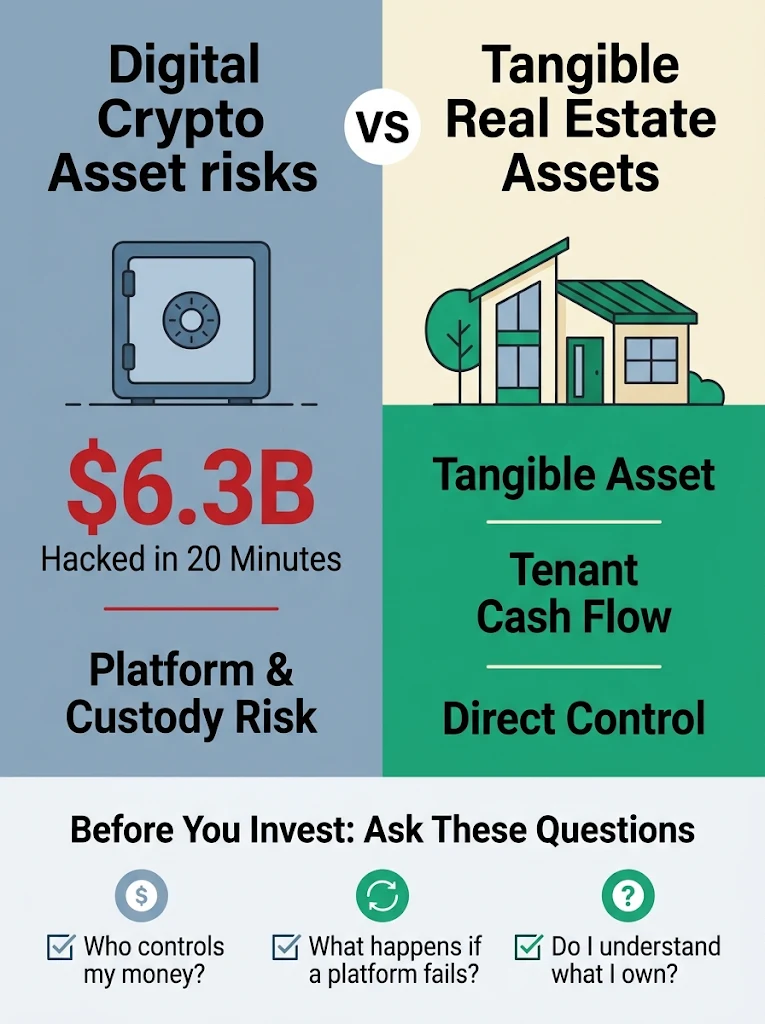
That is essentially what happened on October 29, when hackers allegedly moved roughly $6.36 billion in cryptocurrency from Binance wallets across ten blockchains—with most of it vanishing in just 20 minutes. Investigators linked the attack to a North Korean hacking group, prompting Binance to temporarily suspend withdrawals during the investigation. On that very same day, Polymarket reported a separate security breach involving roughly $2.6 million stolen from user accounts.
This isn’t just a crypto story. It is a wake-up call that every investment carries hidden risks we rarely stop to examine.
The Question Most Investors Skip
When evaluating an investment, most people default to the same four questions:
- “How much can I make?”
- “How fast can it grow?”
- “Can I sell it quickly?”
- “What has it done in the past?”
Those are valid questions, yet they miss the one that matters most: Who actually controls my money?
- With crypto, you often rely on an exchange, wallet infrastructure, private keys, and corporate security systems.
- With stocks, you rely on a brokerage, market liquidity, and corporate leadership.
- With private funds or syndications, you rely on a sponsor, fund manager, lender, and complex legal agreements.
The further you are from directly controlling your asset, the more vulnerable you become to the people, code, and institutions sitting between you and your wealth.
Why I Prefer Real Assets
To be clear: real estate is not risk-free. You can buy in the wrong neighborhood, overpay, suffer vacancies, face expensive repairs, hire a poor property manager, or take on dangerous levels of debt. Real estate is also illiquid—it takes time to sell.
However, direct rental real estate offers something purely digital or paper assets cannot: it is a tangible asset with an undeniable, everyday purpose.
People will always need a place to live. A rental property provides shelter, generates monthly rent, and builds long-term equity. When financed responsibly, your tenants help pay down the mortgage while you hold title to a physical building that cannot be siphoned away by a hacker in 20 minutes.
(Note: Real estate isn’t immune to cybercrime—wire fraud, deed theft, and compromised bank accounts are real threats. Smart investors protect themselves with title insurance, strict wire protocols, cash reserves, and vetted professionals. Still, there is a massive difference between a temporary banking disruption and losing the underlying asset itself.)
Real Estate Gives You a Customer
With speculative investments, your profit relies on the “greater fool” dynamic—hoping someone else will eventually pay more for an asset than you did.
With rental real estate, your return comes from a customer paying for a basic human need.
When you buy wisely, rental income covers operating expenses, services the mortgage, and generates steady cash flow. You don’t need your property to become the next viral trend overnight. You simply need:
- A well-located property
- Responsible management
- Conservative, fixed financing
- Healthy cash reserves for unexpected repairs
None of this guarantees effortless profit—vacancies, property taxes, insurance spikes, and maintenance can eat into margins—but it anchors your wealth in a real, functioning business.
Know What You Own: A Pre-Investment Checklist
Before putting a single dollar into any asset class, run through these seven questions:
- What do I actually own? (A physical deed, shares in a business, or an entry in a digital database?)
- Who controls my money?
- What happens if the platform fails, freezes withdrawals, or gets hacked?
- Can I access my capital when I genuinely need it?
- What hidden fees, debt obligations, or conflicts of interest exist?
- What single event could cause a permanent loss of principal?
- Do I understand this investment well enough to explain it simply to someone else?
If you already own rental properties, make it a habit to audit your cash flow, debt structure, insurance coverage, and emergency reserves regularly. If you invest in crypto, equities, or private deals, never let hype replace rigorous due diligence.
Final Takeaway
Technology is powerful, but convenience is not the same thing as security.
Often, the strongest wealth-builder isn’t the newest app, token, or market trend—it is a straightforward, well-chosen rental property: land, brick and mortar, a paying tenant, and an income stream you can see and understand.
Own assets you understand. Keep cash reserves. Use debt conservatively. And never confuse an exciting story with a safe investment.